Reconstituting (mixing) peptides means dissolving the freeze-dried powder (lyophilisate) in the vial with bacteriostatic water (BAC water) into an injectable solution. Clean, calm handling and the right amount of water are key - the powder itself is never injected, it is always dissolved first.
What does reconstituting mean?
"Mixing" and the technical term "reconstituting" mean the same thing: the powder becomes a liquid again with BAC water. How much water you add sets the concentration and therefore how many marks (insulin units) one dose is on the syringe - the dosage calculator works that out for you.
What do you need?
- The peptide vial with the powder
- Bacteriostatic water (BAC water) - it co-determines how long the finished solution lasts (see below); not tap or saline water
- A sterile U100 insulin syringe (1 ml, no dead space)
- Alcohol swabs and a clean, calm work surface
Common questions about BAC water, concentration and units are answered in the FAQ. Which peptides exist and what for is in the peptide overview.
BAC water or sterile water - and how long does it last?
There are two types of water, and the difference decides the shelf life. Bacteriostatic water (BAC water) is sterile water with 0.9% benzyl alcohol - this additive inhibits microbial growth, so the vial can be punctured multiple times and the solution used over weeks. Sterile water has no such preservative and is therefore for single use only: mixed and used up in one go. Anyone who wants to use the reconstituted solution over several weeks (typically about 4 weeks, refrigerated) must use BAC water - longer storage is not safe with sterile water.
Common mistake: an opened BAC water vial does not last indefinitely either. After the first puncture the benzyl alcohol loses effectiveness over time; manufacturers and the USP advise discarding an opened vial after about 28 days - regardless of how much water is left. So a 10 ml vial does not last many months just because there is technically enough water: if you mix fresh every four weeks, do not keep using opened BAC water beyond the 28-day window. Store opened vials refrigerated (2–8 °C) and always draw with a fresh, sterile needle.
When logged in you can save your mixes with the Dosage Manager and track usage.
Note: Educational information, not medical advice. Many of these substances are experimental and not approved for human use.
Step by step
-
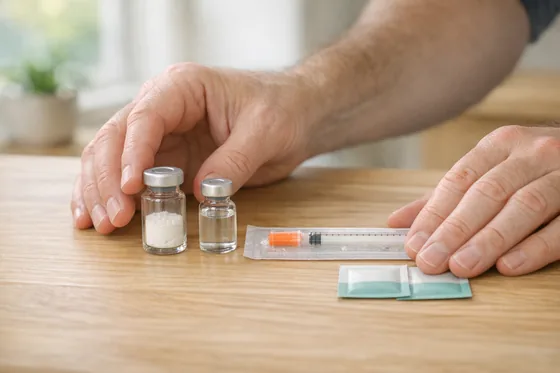 Step 1
Prepare cleanly
Wash your hands and set up a calm, clean surface. Lay out the materials: peptide vial with powder, BAC water, a sterile U100 syringe and alcohol swabs. -
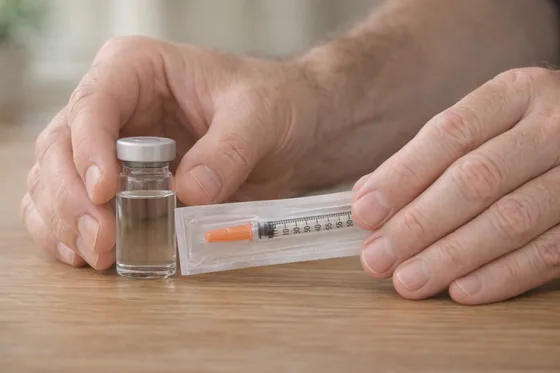 Step 2
Decide the water amount
Use the dosage calculator to decide how much BAC water to add. The volume sets the concentration and therefore the marks per dose. -
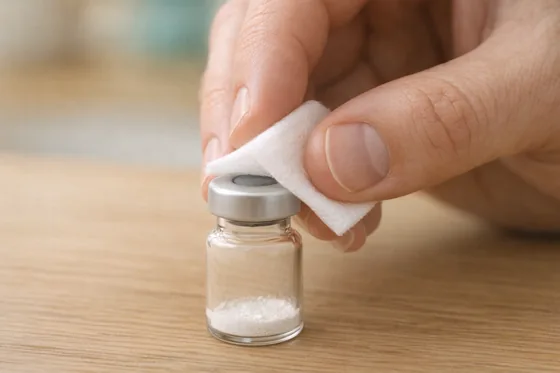 Step 3
Disinfect the stoppers
On a new vial, first flip off the coloured cap to break the metal seal. The metal ring stays on - you only disinfect the exposed rubber stopper. Wipe the rubber stoppers of both vials (powder and BAC water) with an alcohol swab and let them dry briefly. -
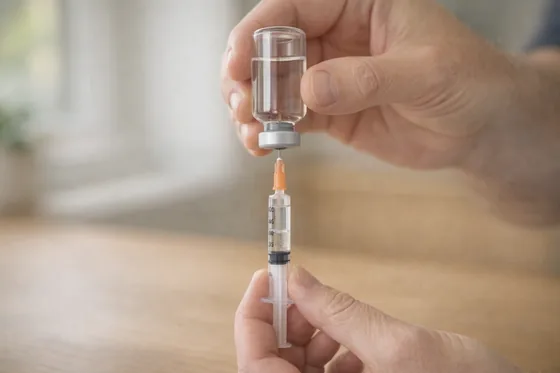 Step 4
Draw up the BAC water
Draw the calculated amount of bacteriostatic water from the water vial into the syringe.
First draw the same amount of air into the syringe and inject it into the water vial before withdrawing the water. This equalises the pressure and prevents a vacuum (negative pressure) from building up with each draw, which would make withdrawal increasingly difficult.
-
 Step 5
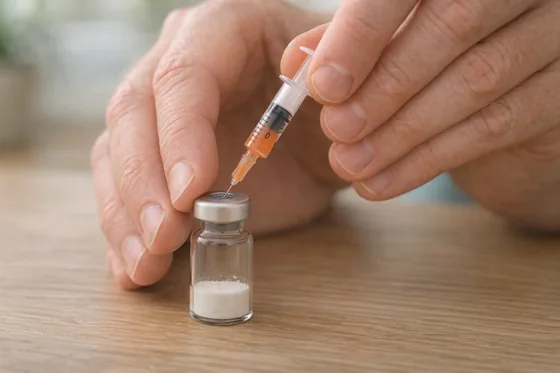
Insert the needle into the peptide vial
Pierce the peptide vial with the filled BAC syringe: insert it centrally into the rubber stopper, then angle the needle toward the glass wall.
There is negative pressure (a vacuum) inside the vial. Hold the plunger firmly while inserting - for example, pin it with your index finger. Otherwise the vacuum immediately pulls water out of the syringe, which can drip onto the powder. That can destroy the peptide.
-
 Step 6
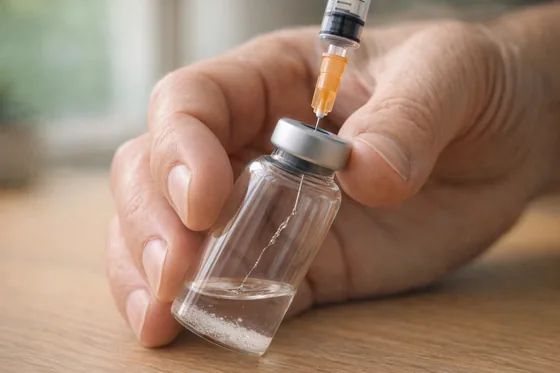
Let it run down the glass wall
Place the needle at an angle against the inner wall of the powder vial and let the water run slowly down the glass - never spray it directly onto the powder. This protects the delicate peptide chains. -
 Step 7
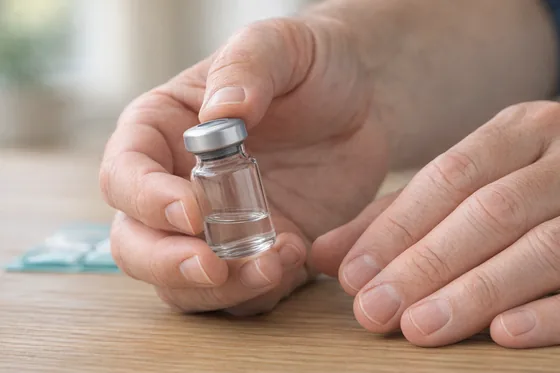
Dissolve gently, do not shake
Gently roll or swirl the upright vial between your fingers until the powder has fully dissolved. Never shake it - shear forces can damage the peptide. The solution should be clear.
A little foam at the edge or on top of the liquid (fine bubbles)? No need to worry - it usually comes from swirling too vigorously. Let the vial rest for 20 to 30 minutes, for example in the fridge; given time and calm, the foam settles, the bubbles rise and the powder finishes dissolving. Before you use it, the solution must be completely clear and foam-free - if it stays cloudy, do not use it.
-
 Step 8
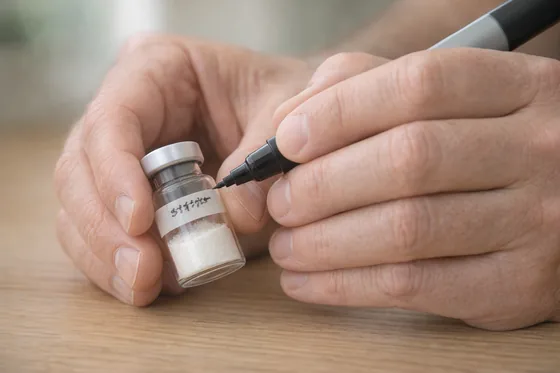
Label, store cool and dark
Label the vial with the date AND the amount of active ingredient (for example "10 mg") so you cannot mix things up later. Store it in the fridge (2–8 °C) and usually use the finished solution within about 21–30 days.
When logged in you can record the date, amount and usage of each mix in the Dosage Manager - so you keep track even without a label.
Peptides are light-sensitive - store the vials in the dark. Opaque insulin/medication cooler cases are practical and discreet; they are surprisingly cheap on online marketplaces (e.g. a search for "vial case" on AliExpress).
Sources
- Bacteriostatic Water - FDA prescribing information (DailyMed)https://dailymed.nlm.nih.gov
- Proper withdrawal of liquids from vials (SOP) - University of Wisconsin-Madisonhttps://www.rarc.wisc.edu/
- Peptide handling & storage - Sigma-Aldrichhttps://www.sigmaaldrich.com
- Reconstitution basics - PubMedhttps://pubmed.ncbi.nlm.nih.gov